1
Department of Quranic Sciences & Hadith, Faculty of Theology, University of Mazandaran, Babolsar, Mazandaran, Iran
2
Associate
3
Assistant professor at University of Mazanderan.
Abstract
The struggle against oppression and the establishment of justice have been the primary objectives and foundational principles of the mission of divine prophets, a theme emphasized extensively in the Quran and Hadith, particularly in Nahj al-Balagha. As a prominent follower of this school of thought, Imam Khomeini (peace be upon him), by emulating these principles, elevated the fight against oppression to a central platform for the formation of an Islamic government, as evidenced in his discourses and actions. Based on the work "Sahifeh Imam," this research employs the modern approach of "intertextual studies" to descriptively and analytically examine his influence from Nahj al-Balagha. In addition to investigating "genettean intertextual relations", the study also applies sub-categories of rhetorical intertextuality. Through an analysis of 33 discourses of Imam Khomeini regarding anti-oppression in the "Sahifeh Nur" that exhibited intertextual links with Nahj al-Balagha, it was found that 19 instances possessed "first-order genettean intertextuality (explicit-intentional), while 14 instances exhibited third-order genettean intertextuality" (implicit). No instances of the second order (hidden-intentional) were identified in his discourses. Ultimately, the examination of Imam Khomeini's discourses on anti-oppression proves his conscious emulation of the words and conduct (Sira) of Imam Ali (peace be upon him). It can be observed that the teachings of Nahj al-Balagha are manifest within the Imam's speech, leading to the conclusion that the establishment of justice and equity, and the struggle against all forms of tyranny and injustice, are among the core objectives of this sacred system.
منابع: قرآن کریم. نهجالبلاغه، 1389ش، سیدرضی، ترجمه: محمد دشتی. قم: اشکذر. 1. احمدی، بابک.1370ش. ساختار و تأویل متن. تهران: مرکز. 2. انوشه، حسن. 1381ش. فرهنگ نامه ادبی فارسی. تهران: وزارت فرهنگ و ارشاد اسلامی. 3. ایرنا ریما، مکاریک. 1384ش. دانش نامه نظریههای ادبی معاصر، ترجمه: مهران مهاجر و محمد نبوی. تهران: آگاه. 4. خمینی(قدس سره)، روح الله، 1389ش. صحیفه امام. تهران: مؤسسه تنظیم و نشر آثار امام خمینی(قدس سره). 5. دهخدا، علی اکبر، 1391ش. فرهنگ لغتنامه. تهران: انتشارات دهخدا. 6. رادفر، ابوالقاسم، 1368ش. فرهنگ بلاغی ادبی. تهران: اطلاعات. 7. شیخالاسلامی، سید حسین.1379ش. گفتار امیر المؤمنین علی علیه السلام همراه با ترجمه فارسی هدایه العلم و غرر الحکم، قم: انصاریان. 8. متقی، علی بن حسامالدین، 1409ق. کنز العمال فی سنن الأقوال و الأفعال، بیروت: مؤسسة الرسالةلبنان. 9. مجموعه قانون اساسی جمهوری اسلامی ایران.1386ش، چاپ ششم، تهران: معاونت حقوقی و امور مجلس ریاست جمهوری. 10. مصباح یزدی، محمدتقی، 1385ش. سیری در ساحل بینش و منش حضرت امام خمینی(قدس سره). با تدوین و نگارش علی احمدی خواه، تهران: مؤسسه آموزشی و پژوهشی امام خمینی+. 11. مصطفی، ابراهیم و دیگران، 1989ق. المعجم الوسیط، چاپ دوم. قاهره - مصر: دار الدعوة. 12. مطهری، مرتضی، 1384ش، عدل الهی، مجموعه آثار شهید مطهری ج/1، تهران: صدرا. 13. معین، محمد،1360ش، فرهنگ فارسی معین، تهران: موسسه انتشارات امیرکبیر. 14. مؤدب، سید رضا، 1392ش. مبانی تفسیر قرآن. چاپ 3، قم: دانشگاه قم. 15. نامور مطلق، بهمن، 1394ش، درآمدی بر بینامتنیت، تهران: سخن. 16. نصر اصفهانی، رضا و نعمتالله اکبری. 1379ش. جنگ فقر و غنا از دیدگاه امام خمینی(قدس سره) در کتاب بررسی اندیشههای اقتصادی امام خمینی+، تهران: ستاد بزرگداشت یکصدمین سال میلاد امام خمینی+، صص197-235. 17. هابرماس، یورگن.1400ش، نظریه کنش ارتباطی، ترجمه کمال پولادی. تهران: انتشارات مرکز. 18. همایی، جلال الدین، 1361ش. فنون بلاغت و صناعات ادبی، تهران: توس. مقالات 19. آذر، اسماعیل. 1395ش. تحلیلی بر نظریههای بینامتنیت ژنتی، پژوهشهای نقد ادبی و سبک-شناسی، ش3، صص11-31. 20. صباغی، علی. 1391ش. بررسی تطبیقی محورهای سهگانه بینامتنیت ژنت و بخشهایی از نظریه بلاغت اسلامی. پژوهشهای ادبی، ش38، صص59-70. 21. مرتضایی، سیدجواد. 1393ش. از توارد تا سرقت ادبی. فنون ادبی دانشگاه اصفهان، ش1، صص59-68. 22. نامور مطلق، بهمن. 1386ش. ترامتنیت مطالعه روابط یک متن با دیگر متنها. پژوهشنامه علوم انسانی، ش56، صص83-98.
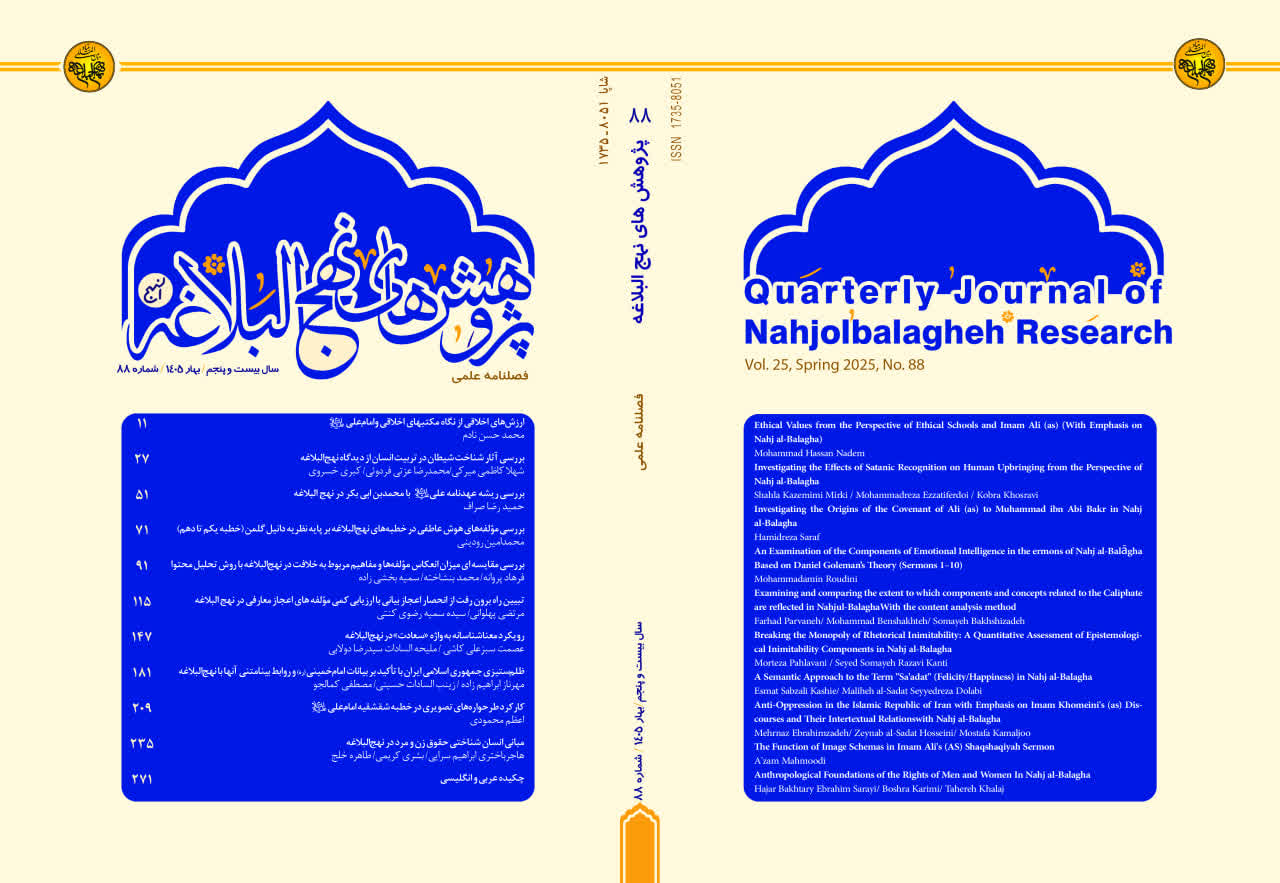
ebrahimzadeh, M., hosseini, Z. & Kamaljoo, M. (2026). Anti-Oppression in the Islamic Republic of Iran with Emphasis on Imam Khomeini's (as) Discourses and Their Intertextual Relations with Nahj al-Balagha. Nahjolbalagheh Research, 25(1), 181-206.
MLA
ebrahimzadeh, M., hosseini, Z., & Kamaljoo, M. "Anti-Oppression in the Islamic Republic of Iran with Emphasis on Imam Khomeini's (as) Discourses and Their Intertextual Relations with Nahj al-Balagha", Nahjolbalagheh Research, 25, 1, 2026, 181-206.
HARVARD
ebrahimzadeh M., hosseini Z., Kamaljoo M. (2026). 'Anti-Oppression in the Islamic Republic of Iran with Emphasis on Imam Khomeini's (as) Discourses and Their Intertextual Relations with Nahj al-Balagha', Nahjolbalagheh Research, 25(1), pp. 181-206.
CHICAGO
M. ebrahimzadeh, Z. hosseini & M. Kamaljoo, "Anti-Oppression in the Islamic Republic of Iran with Emphasis on Imam Khomeini's (as) Discourses and Their Intertextual Relations with Nahj al-Balagha," Nahjolbalagheh Research, 25 1 (2026): 181-206,
VANCOUVER
ebrahimzadeh M., hosseini Z., Kamaljoo M. Anti-Oppression in the Islamic Republic of Iran with Emphasis on Imam Khomeini's (as) Discourses and Their Intertextual Relations with Nahj al-Balagha. Nahjolbalagheh Research. 2026;25(1):181-206 (In Persian).