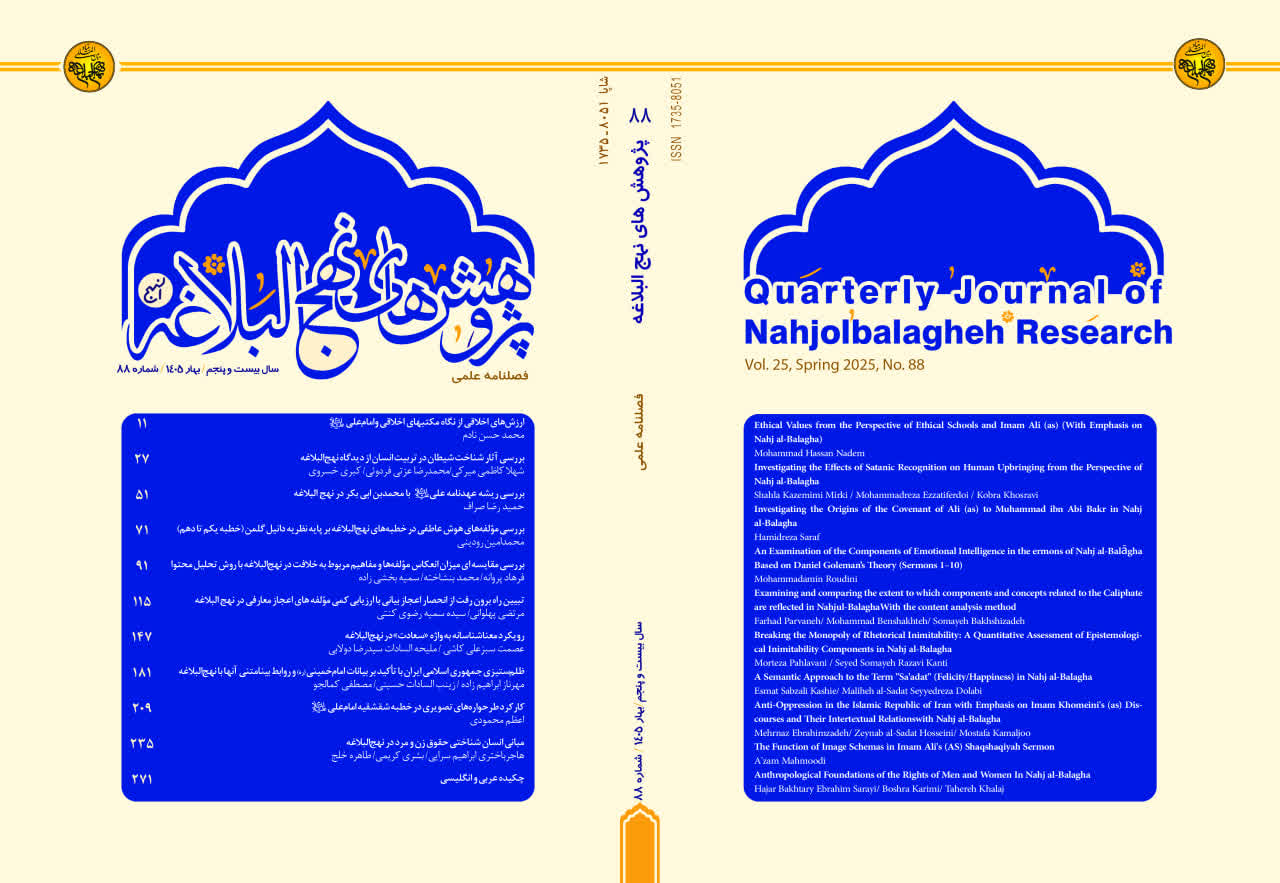
Nahjolbalagheh Research

Nahjolbalagheh Research

Current Issue: Volume 24, Issue 4 - Serial Number 87, Autumn 2025, Pages 1-299 

Publication Information

Publisher

Director-in-Charge
Editor-in-Chief

Frequency
Quarterly
Print ISSN

Keywords Cloud

  • Nahj al-Balaghah
  • Imam Ali (AS)
  • Nahj al-Balagha
  • Imam Ali
  • Justice
  • Quran
  • culture
  • Cognitive Linguistics
  • Education
  • Nahjul-Balaghah
  • intertextuality
  • Conceptual Metaphor
  • Women
  • ethics
  • world
  • Economic Justice
  • Social Justice
  • content analysis
  • Pathology
  • Rhetoric
  • Shahnameh
  • Islamic management
  • Imam Ali (PBUH)
  • Imam Ali (A.S.)
  • Government
  • Management
  • Islam
  • components
  • semantics
  • Islamic society
  • stylistics
  • Nahj
  • Imamate
  • Nahj ul-Balaghah
  • Work
  • Amir al-Mu\'minin
  • Principles
  • Violence
  • Liberalism
  • translation
  • Rights
  • Amir al-Mu\'minin (AS)
  • wisdom
  • Spirituality
  • Governance
  • Alawi Government
  • alawite tradition
  • Jurisprudence
  • leadership
  • Nahj al-Balagheh
  • Tawhid
  • Supervision
  • Bayt al-mal
  • Knowledge
  • war
  • Monotheism
  • conceptual metaphors
  • intensity of action
  • Discourse Analysis
  • Good Governance
  • Alawite government
  • Human rights
  • Unity
  • نهج‌البلاغه
  • Nahjol Balaqe
  • People
  • Imam Khomeini
  • Nahjolbalagha
  • self
  • Social Capital
  • Resurrection-Believing
  • Heart
  • Nahjolbalaghe
  • Practical Ethics
  • Khutbah Qasi\'ah
  • ruler
  • translation of sermons
  • Thematic Analysis
  • Imam Ali(peace be upon him)
  • Speech Act
  •    Nahj al-Balaghah
  • Moral education
  • Nakesin
  • Characteristics
  • Islamic Government
  • Solutions
  • God
  • tax justice
  • Poverty
  • Letter 53
  • freedom
  • Speech
  • Muawiyah
  • religious authority
  • religious government
  • Superiority
  • Monotheistic Education
  • Politics
  • Qualitative Content Analysis
  • asceticism
  • Realism
  • social semiotics
  • honors
  • political ethics
  • human resources
  • Imam Ali (peace be upon him)
  • Security
  • Society
  • religion
  • Aesthetics
  • Index of Knowledge
  • Power
  • Imam Ali(a.s.)
  • structure
  • Knowledge of Judgment
  • the criterion of boasting
  • Caliphate
  • Accountability
  • Greimas
  • translation criticism
  • Human dignity
  • Conflict Management
  • orientalists
  • Punishment
  • Responsibility
  • resurrection
  • Behavior
  • Doubt
  • Political Power
  • secularism
  • duties
  • Nahj al-Balaghah’s teachings
  • Theoretical Education of Nahj al-Balaghah
  • Successful Management
  • teachings of Nahj al-Balaghah
  • Hazrat Ali (A.S.)
  • Piety
  • Malik Ashtar treaty
  • Appeal tools
  • legitimacy
  • Future generations
  • Peace
  • Lifestyle
  • letters of Imam Ali (AS)
  • faith
  • behaviorology
  • Agents
  • conceptualization
  • Imam Ali (A.S)
  • Norms of Appointment
  • Ibn Meitham`s Description of Nahj al-Balaghah
  • Ignorant society
  • interpretation
  • Linguistic Stylistics
  • target domain
  • Trust
  • Complaint
  • good management
  • hurriyat
  • Balance
  • authenticity of Nahj al-Balagha.&‌emsp
  • discovery procedures
  • Individual and Social Components
  • Toryeh
  • Speaking Qur\'an
  • political system
  • Rasikhan in knowledge
  • Middle Ends
  • Islamic governance
  • religious bias
  • Islamic Civilization
  • Bio-spiritual
  • questioning
  • public trust
  • Baumrind
  • Imam Ali`s Manner of Life
  • Malik Ashtar
  • Elderly
  • Literary innovation in Nahj al-Balagha
  • Functional Linguistics
  • Trust Metaphor
  • commentators of nahj al-balaghah
  • the thirty-second sermon
  • Persian translation
  • Negligence
  • Proving Guardianship
  • Shia
  • Nahj al-Balaghah  Imam Ali (AS)
  • moral principles
  • Image-Creating
  • Linguistics
  •    Moral leadership
  • university
  • ethics of thinking
  • Realist Idealist
  • Imam Ali(peace be upon him)
  • cognitive stylistics
  • سیاست متعالی
  • audienceology
  • the Prominence of Uthman`s Murder